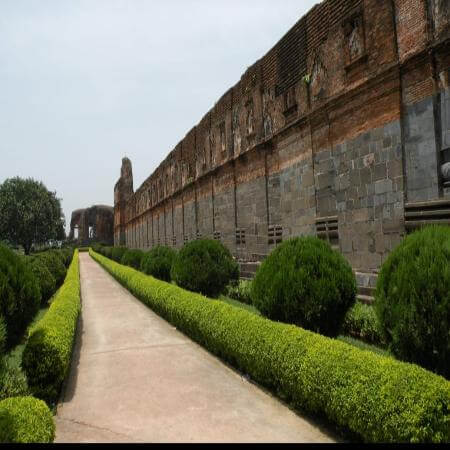
Adina Mosque, Malda: The Grand Legacy of Sultanate Bengal
Adina Mosque, Malda: The Grand Legacy of Sultanate Bengal
1. Construction and Founder
Built between 1373–1375 CE by Sultan Sikandar Shah, son of Ilyas Shah. It was the largest mosque in India during that period.
2. Architecture and Design
Modeled after Umayyad mosques, it had a massive hypostyle prayer hall, spacious corridors, and domed courtyards. The mosque featured 88 stone arches and nearly 378–387 small domes, giving it magnificent grandeur.
3. Size and Materials
Measuring about 524 ft long and 322 ft wide, it reused stones and carvings from pre-Islamic Hindu and Buddhist structures.
4. Political and Cultural Context
After defeating the Delhi Sultanate twice, Sikandar Shah declared himself the “Caliph of the Faithful” and built the mosque to project his religious and political supremacy.
5. Present Condition
Now in ruins, the Adina Mosque is preserved under the Archaeological Survey of India (ASI). Restoration efforts are underway to nominate it as a UNESCO World Heritage Site.
6. Controversy
Some groups claim the mosque was built over a Hindu temple (Adinath Mandir). Carvings of Hindu deities found in reused stones support this theory, though ASI considers such claims disputed.
✨ Once the largest Islamic monument in the Indian subcontinent, the Adina Mosque today stands as a majestic reminder of Bengal’s architectural, cultural, and historical richness.