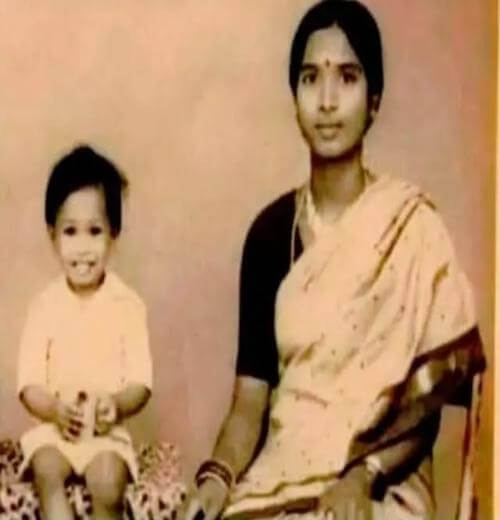
Burnt Bread & Moonlit Nights” — A.P.J. Abdul Kalam’s Eternal Tribute to His Mother
Special Report – (Online Bongodarpan)
“When I was a child, my mother used to cook for us after an entire day of hard work. One night, she served my father a plate of vegetables and completely burnt bread. I waited to see my father’s reaction. But he quietly ate the bread and then asked me about my day at school.
I don’t remember what I answered him, but I clearly remember my mother apologizing to him for serving burnt bread. My father smiled and replied, ‘Darling, I love burnt bread.’
Later that night, when I kissed him goodnight, I asked if he really liked burnt bread. My father hugged me and said, ‘Your mother worked hard the whole day and was very tired. A burnt bread doesn’t hurt, but harsh words do. Life is made up of imperfect things and imperfect people. I am not perfect either. Like everyone else, I too forget birthdays and anniversaries. What I have learned in life is that we must accept each other’s faults and cherish relationships. Life is too short to wake up with regrets. Love those who truly value you, and show compassion even to those who don’t.’
The year was 1941. The Second World War was raging. We lived in Rameswaram, and our family was going through difficult times. I was only 10. The echoes of war in Colombo reached Rameswaram too—there was a shortage of food and essentials.
We were ten siblings in the family, including three who had families of their own. My grandmother and mother held the family together through thick and thin.
Every morning at 4 a.m., I would wake up and go to my mathematics teacher, who taught only five students a year free of charge. My mother, Ashiamma, would wake up before me, get me ready, and send me off. After returning around 5:30 a.m., I would walk three kilometers to the railway station to collect newspapers. During wartime, trains did not stop at the station; newspaper bundles were thrown onto the platform from moving trains. My duty was to catch them and deliver them across the town.
After selling newspapers, I returned home around 8 a.m. to have breakfast. My mother always gave me a little extra, since I was balancing studies and work. In the evenings, after school, I went around collecting dues from newspaper customers.
One evening, while we were all eating, my mother kept giving me rotis, and I kept eating them. After dinner, my elder brother scolded me gently, saying, ‘Kalam, you kept eating while mother gave you all the rotis she had kept for herself. She hasn’t eaten at all. You must be more responsible in times of scarcity.’ His words shook me to the core. I immediately hugged my mother.
Though I was only in Class V, as the youngest son, I had a special place in the family. We had no electricity at home—only kerosene lamps that burned from 7 to 9 p.m. My mother gave me a small kerosene lamp of my own so that I could study till 11 p.m. To this day, I still see my mother’s face glowing in the moonlight.
My mother lived till the age of 93. She was a divine embodiment of love and kindness. Even now, I often wake up at night with tears rolling down, remembering how I slept with my head on her lap under the envious eyes of my siblings.
Her love, care, and faith gave me strength. Her hands soothed every pain of mine and taught me how to conquer fear with the power of faith.”
[Source: Condensed translation from A.P.J. Abdul Kalam’s official website]