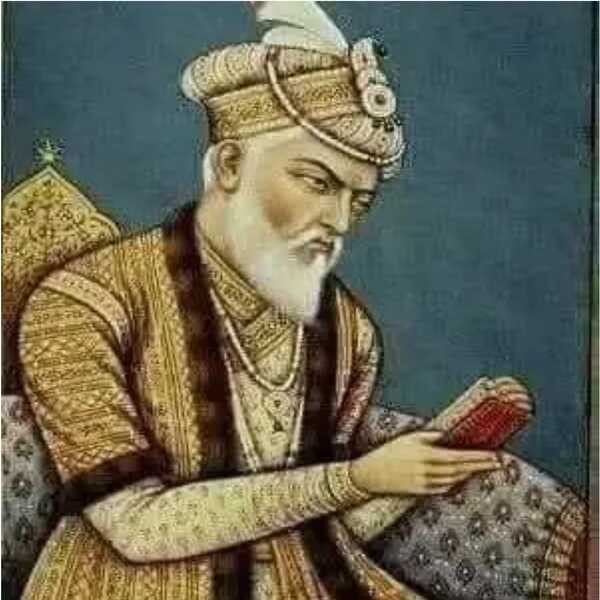
Emperor Aurangzeb and His Colorful Life
If you come to know the detailed facts about the personal wealth of the emperor of the world’s largest empire of that time, you will be truly astonished. After Emperor Shah Jahan, the Mughal throne of Delhi was taken over by Sultan Muhiuddin Muhammad Alamgir, popularly known across the Indian subcontinent as Emperor Aurangzeb.
He ruled India continuously for 49 years. His empire covered nearly 4 million square kilometers, meaning he was the sovereign of almost the entire Indian subcontinent. During his reign, the population of the empire was nearly 160 million. His annual revenue collection amounted to about 450 million US dollars. At the same time, King Louis XIV ruled France, but Aurangzeb’s revenue was ten times greater than that of France.
During his reign, India became the world’s largest economic center. He elevated India’s economy by nearly 90 million US dollars. India’s GDP was one-fourth of the world’s GDP. In 1707, as the head of the wealthiest state in the world, Emperor Aurangzeb, at the age of 88, drafted his will.
After his death, it was found that in his will he left only 14 rupees and a few caps he had woven with his own hands. As per his will, these were to be sold to cover the expenses of his burial. Apart from ruling the empire, Aurangzeb spent his leisure time copying the Holy Qur’an by hand, through which he earned 300 rupees. In his will, he instructed this money to be distributed among the poor and needy.
Yet, in Indian history, he is often portrayed as a villain, a tyrant, and a religious fanatic. He is accused of demolishing temples, but it is rarely mentioned that he also donated land and funds for the construction of several temples. His royal court was filled with numerous non-Muslim courtiers, and countless non-Muslim officers served in his army.
In the Oxford History of India, Dr. Ramesh Chandra Majumdar wrote that Aurangzeb used to say: “I was sent by God to live and labor not for myself but for others.” This quote reflects how deeply responsible he was towards his country and people. His will demonstrates his financial integrity—he never used state funds for personal luxuries but bore his personal expenses through his own labor.
Every human being has both virtues and flaws. But history has often portrayed him as a foreign tyrant indulged in luxury. The real facts reveal that Aurangzeb was not indulgent in luxuries at all but was deeply sincere and responsible towards the state.