Katra Mosque: The Glorious Legacy of Murshidabad
Katra Mosque: The Glorious Legacy of Murshidabad
1. Origin and Construction
The word “Katra” comes from Arabic–Persian, meaning Caravanserai or traveler’s inn. Built in 1723–24 CE by Nawab Murshid Quli Khan, it served as a mosque, madrasa, and caravanserai.
2. Patron and Purpose
As the first Nawab of Bengal, Bihar, and Odisha, Murshid Quli Khan shifted his capital from Dhaka to Murshidabad. The mosque was not only for prayer but also an Islamic learning hub.
3. Architecture
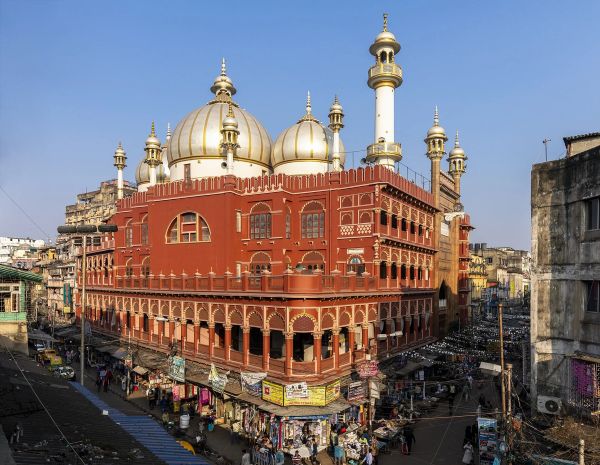
Rectangular in design, it had two-storeyed chambers around the courtyard to house about 700 Quran students. Originally, it had five domes and four corner minarets; today, only two domes and two minarets remain. Built with brick and basalt stone, it reflects unique Indo-Islamic craftsmanship.
4. Cultural Role
The mosque doubled as a madrasa. Its courtyard echoed with prayer, Quranic recitation, and lively discussions.
5. Destruction by Earthquake
The devastating earthquake of 1897 destroyed many domes and minarets, leaving much of the mosque in ruins.
6. Present Condition
Now preserved by the Archaeological Survey of India (ASI), Katra Mosque is a national heritage site. At sunset, its walls glow in golden-pink hues, creating a breathtaking sight.
7. Economic and Historical Context
Murshidabad was a major hub for silk, jute, and trade. The mosque functioned both as a religious site and a resting place for traders.
8. Inscriptions
Two Persian inscriptions adorn the mosque—one bearing reference to Prophet Muhammad (PBUH), another marking its construction in Hijri 1137 (1724–25 CE).
✨ Today, Katra Mosque stands as a historic and architectural jewel of Bengal, attracting scholars and tourists alike.