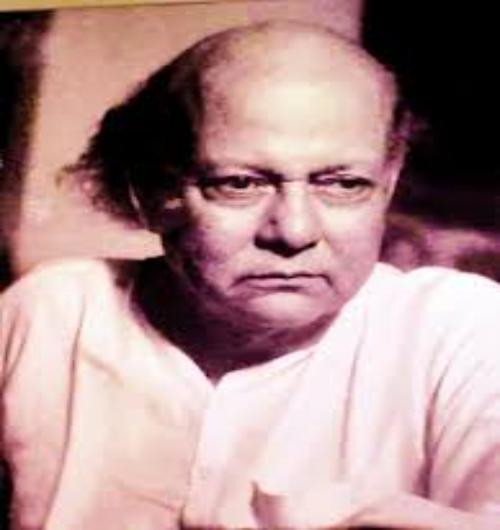
Syed Mujtaba Ali: The Prince of Wit, The Master of Adda, The Global Voice of Bengali Literature
Dr. A. Kalam (Barasat) – 13 September 2025
In Bengali literature, there are certain figures who do not merely write books but inscribe life itself—through every walk, every question, every word, and even in their jokes. Among them, and perhaps foremost, stands Syed Mujtaba Ali.
To remember him is to recall a rare wit, profound erudition, and a living stream of thought steeped in the fragrance of literature. He was a writer whose every line carried social consciousness wrapped in humor and the intimacy of literature.
Born on 13 September 1904 in Sylhet (now in Bangladesh), his education was astonishingly diverse. It began under the shadow of Rabindranath at Shantiniketan, moved to comparative religion at the University of Bonn in Germany, then to Arabic and Islamic culture at Cairo University, and finally returned through Aligarh and Delhi to Bengali literature. This expansive education made him not just a scholar but a thinker with a global vision. His command over **eight languages—Bengali, English, Hindi, Urdu, Persian, Arabic, French, and German—**was remarkable.
His literary career was a reflection of his lived experiences. His humorous writings were not just sources of laughter but also sharp observations of life infused with human warmth. Deshe Deshe was more than a travelogue of Afghanistan—it was a universal literary narrative. Panchti Ratna, Chacha Kahini, or Shabnam—in all these works, he effortlessly portrayed the people, cultures, and lands he had known.
He once said:
“Writing is not just storytelling,
Writing is wearing the mask of laughter to hide one’s tears.”
This line contains the essence of his literary philosophy.
Mujtaba Ali was a master of wit. For him, adda (informal conversations) was an inseparable part of life. Once, hearing that the Bengali word for ‘round’ was coined as rond, he quipped, “Then should pound be translated as pāud?” At Shantiniketan, when visitors said they had already seen Kshitimohan, Nandalal Bose, and Haricharan, he joked, “So, after seeing the tigers and lions, you’ve come now to see the hyena?”
Such was his blend of humor and intellect—light on the surface, yet deeply suggestive.
He often described himself as a Fazil—not in the Bengali sense, but in the Arabic sense: “learned.” His scholarship never came across as dry display; it was always veiled in the subtle humor of his writings. His experiences, linguistic mastery, and cultural depth shaped a unique literary persona.
For him, literature had to be simple and truthful. He said:
“Writing should be like a door—when opened, it lets in light; when closed, it casts shadow.”
His prose was simple yet never trivial; humorous but never shallow; moving yet never sentimental.
On his birthday today, we remember the contemplative yet humane voice of his writings. His works felt like a friendly dialogue with the reader, where words sometimes laughed and sometimes fell silent with exhaustion—carrying within them the hidden strength of life’s realizations.
“You must not grow accustomed to my absence,
You must not grow accustomed even to my presence…”
These lines carry the ephemerality of human emotions—separation and fleeting attachment—that defined his literary essence.
We bow in respect to the prince of Bengali humorous prose, the Fazil thinker, and the eternal name of adda—Syed Mujtaba Ali.