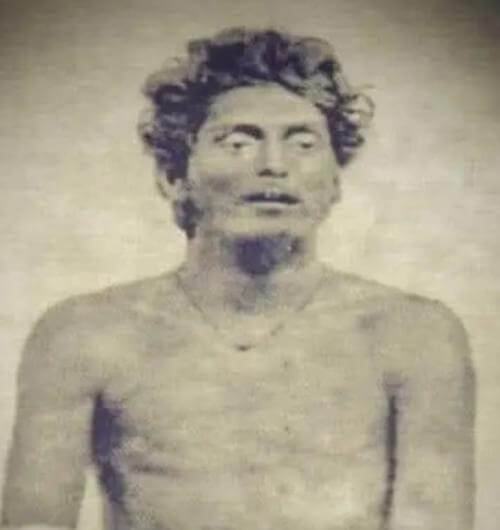
The Immortal Revolutionary Bagha Jatin
On 9th September 1915, as the sun was setting, the legendary battle at the banks of the Buribalam River in Balasore came to an end. Jatindranath Mukherjee—better known as Bagha Jatin—was severely wounded. With bullets piercing his body, his fingers blown off, and his abdomen torn apart, he was taken to Balasore Government Hospital. At that time, saline was not available, so lemon water was poured into his mouth to keep him alive. His wounds were stitched with great difficulty.
The British ordered that this "most wanted revolutionary" must be kept alive, hoping to extract secrets about his comrades and their plans. Late at night, Police Commissioner Charles Tegart arrived with his officers to interrogate him. But Jatin, with a faint smile, gave only one reply:
“We shall die, the nation will awaken.”
By dawn, he was bleeding profusely. Before his final breath, he laughed and said—
“So much blood in my body? By fortune, every drop has been offered at the feet of Mother India.”
On 10th September 1915, the sun of freedom set with the martyrdom of Bagha Jatin.
So impressed was Charles Tegart that he admitted—
“If Jatindranath Mukherjee had been an Englishman, his statue would stand beside Nelson in Trafalgar Square.”
Bagha Jatin not only fought but redefined the path of revolution. He broke away from the old "hit-and-run" model, choosing instead to awaken the nation through self-sacrifice.
Even his followers embraced this spirit. On the eve of their hanging, revolutionaries Niren and Manoranjan wrote to Jatin’s sister Binodbala Devi—
“Sister, tomorrow will be our Vijayadashami. We shall pray for our motherland’s freedom before we depart. May we be born again in this land to complete our leader’s unfinished mission.”
On his 109th death anniversary, the nation bows in reverence to the immortal hero, Bagha Jatin.