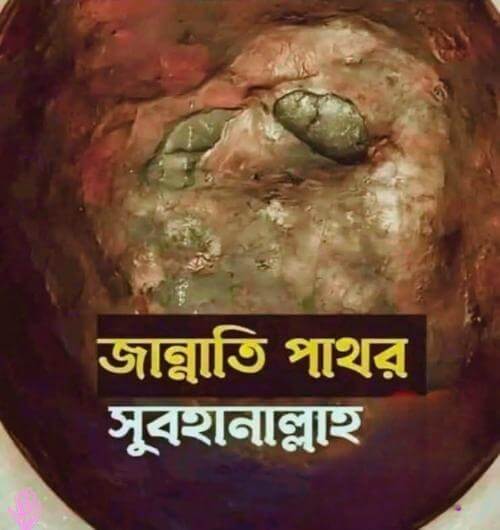
“The Stone from Paradise: The Story of Hajar al-Aswad – Islam’s Most Sacred Rock”
At the heart of Islam's holiest site, the Kaaba in Mecca, lies a mysterious and revered object: the Black Stone, known in Arabic as Hajar al-Aswad. This stone, often referred to as the "Jannati Pathar" or “Stone from Paradise”, holds deep spiritual significance for Muslims worldwide.
According to Islamic tradition, the stone was sent down from Jannah (Paradise) by Allah and originally whiter than milk, but turned black due to the sins of mankind. It is placed on the eastern corner of the Kaaba and is kissed or touched by millions of pilgrims during the Hajj and Umrah as a gesture of love and reverence.
The Black Stone is not worshipped; rather, it is honored because the Prophet Muhammad (PBUH) touched and kissed it. During the reconstruction of the Kaaba, the Prophet himself placed the stone in its position, showing its significance in the legacy of Islam.
Though its exact origins remain a mystery, many believe it to be a meteorite or a celestial stone, reinforcing the belief in its divine origin.
For Muslims, the Jannati Pathar is more than just a rock — it is a symbol of connection to the divine, to the Prophet, and to centuries of faith, sacrifice, and unity.